“Buddha” in Sanskrit means “The Enlightened One.” How many of us truly understand this enlightenment’s multifaceted nature? It exists within the broader canvas of Sanatana Dharma.
On this auspicious occasion of Buddha Purnima, the world remembers Gautama Buddha and his teachings of Ahimsa and inner awakening. It is worth revisiting and reflecting on the deeper, and perhaps lesser-known, spiritual significance of Buddha in the Vedic context.
Misconceptions and Confusion
There exists a deep divide in understanding Buddha’s place across different traditions:
- Many followers of Sanatana Dharma are puzzled by the mention of Buddha in ancient scriptures. These texts, like the Srimad Bhagavatam and Ramayana, predate Gautama Buddha by millennia.
- Meanwhile, some atheists or anti-Vedic voices champion Buddha as a rebel who opposed the Vedas. They, therefore, dismiss Sanatana Dharma entirely.
Both interpretations miss the mark.
Three Buddha Incarnations According to Vedic Lore
According to various Vedic texts and puranas, Buddha is not a singular figure. Instead, he is a divinely recurring incarnation (avatar) of Lord Vishnu. He appears in different forms across different ages (yugas) to restore Dharma.
1. Tripurakhya Buddha
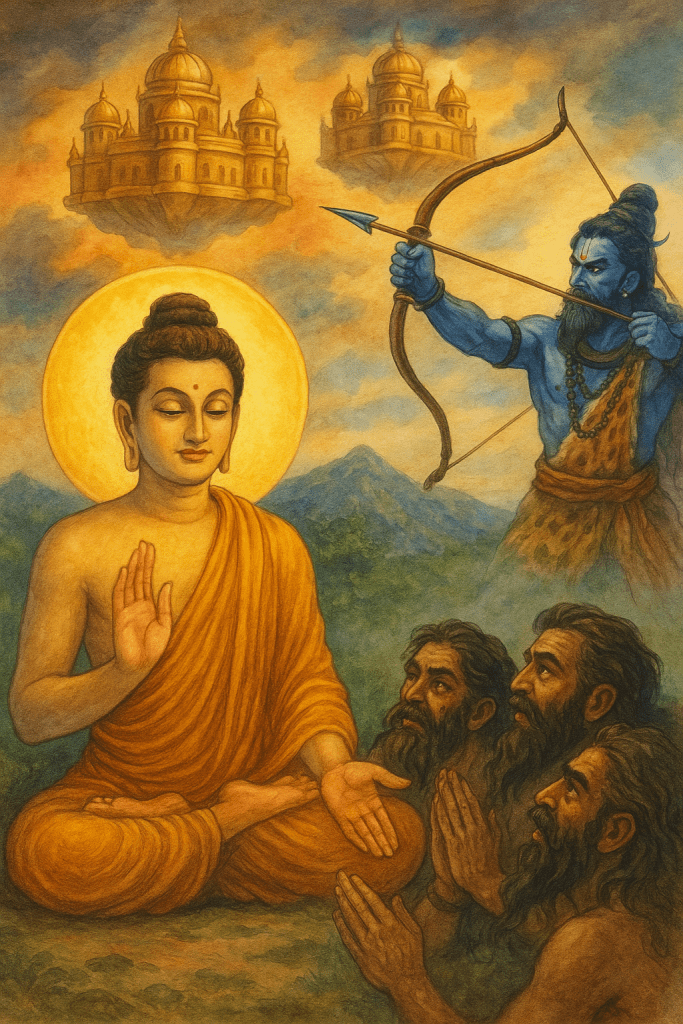
In the ancient cosmic battle, the Tripurasuras wreaked havoc from their flying fortress cities. To combat this, Lord Vishnu incarnated as Buddha. His purpose? To distract the demons’ followers, thereby allowing Lord Shiva to destroy the cities and restore cosmic order.
Purpose: Divine distraction as a strategy for victory of Dharma.
2. Tatagatha Buddha (King Deodas of Kashi)
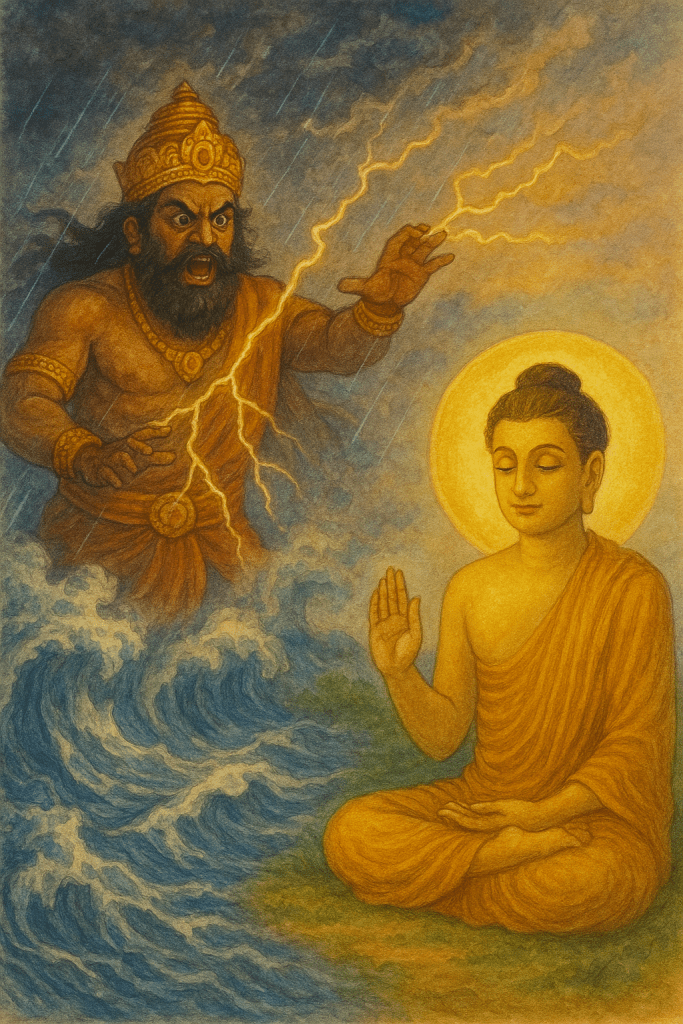
King Deodas was a mighty ruler of Kashi. He wielded such control that he disrupted the cosmic balance of nature. He also disrespected the Devatas. Vishnu incarnated as Buddha. He cleverly challenged Deodas’ ego. This steered him away from his path and allowed the Devatas to resume their cosmic duties.
Purpose: Undoing ego-driven Adharma through peaceful deception.
3. Gautama Buddha
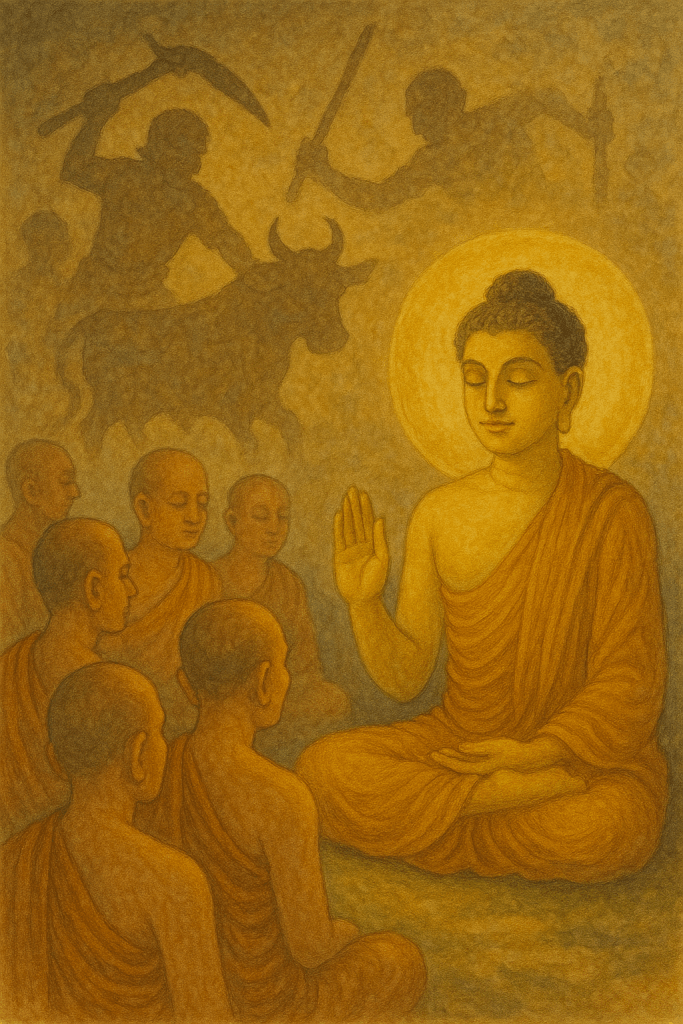
The most familiar incarnation, Gautama Buddha, appeared during a time when Vedic rituals had devolved into mere formalities. During this period, animal sacrifices were rampant. Lord Vishnu incarnated to negate Vedic practices externally. The aim was not to destroy the essence of Vedic Dharma. Instead, it was to restore its soul: compassion, non-violence, and inner truth.
Purpose: Reformation of Dharma when its external shell became corrupt.
Understanding Buddha’s Role as a Reformer, Not a Rebel
These incarnations teach us something profound: Dharma is eternal, but its expressions must evolve. When the path becomes corrupted or rigid, the Divine intervenes not to destroy Dharma. It dismantles what no longer serves it. When rebuilding a collapsing wall, the old structure must first be broken.
This is why Lord Vishnu’s Buddha avatar negated the Vedas outwardly—to preserve their spirit inwardly.
Timeless Wisdom in Changing Times
Buddha’s strategy was radical yet compassionate. By eliminating the decayed forms of practice, he opened the door for new thought. He also introduced new ethics and new compassion. For a time, Buddhism became the dominant path—not as a contradiction to Sanatana Dharma, but as a divine course-correction.
Just as every great tree sheds leaves to grow stronger, so does Dharma evolve, often in ways beyond immediate understanding.
🌕 A Prayer on Buddha Purnima
Let us pray to Lord Buddha, the Enlightened One. We are in a time when violence, ignorance, and ego threaten humanity’s fabric. May we cultivate the wisdom to discern true Dharma and act with clarity, agility, and compassion🕉
Can you think of modern examples where breaking with tradition was necessary to preserve a greater truth?
How do we distinguish between genuine spiritual reform and harmful rejection of tradition?
P.S. Inspired by insights from the Nanduri Srinivas YouTube Channel. Full credit to the profound spiritual discussions found there.
 bramhajignyasa.com
Leave a comment